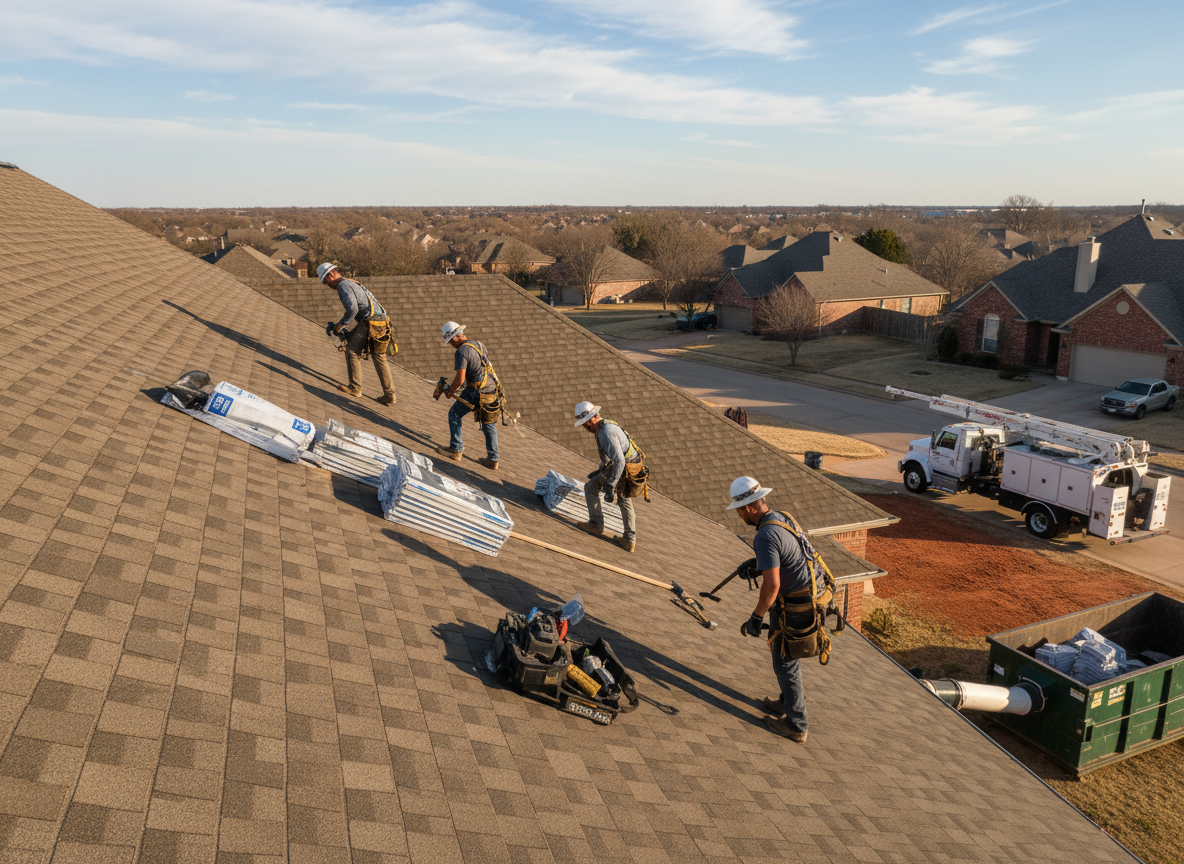
The Mountain West is a region of extremes held together by one constant: sunlight. From the Sonoran Desert to the high plains of Montana, roofs here spend most of the year being baked, and the failures that follow are thermal rather than hydrological. Sealants harden, metal expands and contracts through enormous daily swings, tile bedding cures and cracks, and the underlayment beneath a tile field embrittles decades before the tile does. Then the monsoon arrives in a short, violent season and finds every one of those weaknesses in a single afternoon.
Seven states across desert and high country
- Arizona — desert heat, monsoon rain and a large tile and foam roofing stock.
- Nevada — extreme heat in the south, mountain snow in the north, and very low humidity throughout.
- Utah — snow at elevation, thermal cycling, and rapid population growth in the Wasatch corridor.
- New Mexico — high desert, intense sun, monsoon rain and a long tradition of flat and low-slope roofs.
- Montana — deep snow, high wind and a rural roofing stock where metal dominates.
- Idaho — a wetter north and a high desert south, with snow load across most of the state.
- Wyoming — wind, snow and a short construction season at elevation.
Ultraviolet first, then the monsoon
Ultraviolet exposure
At altitude and in clear desert air, ultraviolet intensity is higher than at sea level in a humid climate. Asphalt oxidises faster, sealants lose elasticity faster, and plastic components such as vent boots and pipe collars fail sooner. A roof in Phoenix or Albuquerque receives a lifetime of sun exposure in a fraction of the time a roof in Ohio would take to receive the same.
Monsoon rain
Across Arizona, New Mexico, southern Nevada and parts of Utah, a summer monsoon brings a concentrated rainy season, typically from July into September. Rain arrives in short, intense bursts after months of dry weather, and it arrives on a roof whose details have been baked and have not been tested by water for a year.
That first storm is when the failures appear: hardened sealant that has pulled away from a flashing, a tile underlayment that has cracked where it was walked, a scupper blocked with months of dust and debris.
Thermal movement
The daily temperature swing in the high desert can be enormous, and every material on the roof responds differently. Metal panels move; tile and masonry do not; sealant has to accommodate the difference and eventually cannot. This is why metal roofs here need clips that allow movement, and why sealant joints need renewal on a schedule rather than after a leak.
Snow at elevation
Above a certain height, the Mountain West is snow country. Snow load, ice dams and freeze-thaw reappear in the mountain towns of Utah, Colorado's western slope, New Mexico, Idaho, Montana and Wyoming, and roofs there have more in common with the northern tier than with the desert below.
Wind and wildfire
High wind is common across the exposed plains and passes, and it works at edges and ridges exactly as it does elsewhere. Wildfire is a growing consideration across the region, and ember-resistant detailing at valleys, vents and roof edges is part of the conversation in fire-prone areas.
Cities across the Mountain West
- Arizona: Phoenix, Tucson, Mesa, Scottsdale, Flagstaff
- Nevada: Las Vegas, Henderson, Reno, Carson City
- Utah: Salt Lake City, Provo, Ogden, St. George
- New Mexico: Albuquerque, Santa Fe, Las Cruces, Roswell
- Montana: Billings, Missoula, Bozeman, Great Falls
- Idaho: Boise, Idaho Falls, Coeur d'Alene, Twin Falls
- Wyoming: Cheyenne, Casper, Laramie, Jackson
Tile, foam and metal at altitude
Clay and concrete tile is the dominant residential covering in Arizona, southern Nevada, New Mexico and parts of Utah. It suits the climate, it lasts, and its weakness is entirely in the underlayment beneath it and the fixings that hold it down.
Spray polyurethane foam with an elastomeric coating is common on low-slope residential and commercial roofs in Arizona and New Mexico. It is seamless and insulating, and it depends completely on the coating above it: once the coating degrades under ultraviolet light, the foam beneath begins to break down quickly.
Metal roofing is standard across Montana, Idaho, Wyoming and rural Utah, where snow shedding, longevity and the ability to repair a panel matter. Standing seam dominates on houses; through-fastened panels dominate on agricultural buildings.
Asphalt shingle covers most of the suburban housing in the region's cities, and its life here is shorter than the same product would achieve in a cooler climate.
Low-slope membrane roofs cover commercial buildings and the flat-roofed housing of the southwest tradition, where parapets, scuppers and evaporative cooler penetrations are part of the landscape.
Heat in the valley, snow at elevation
In Phoenix, Tucson and Las Vegas, the work is dominated by heat and by the two annual tests: the dry season, when nothing leaks and everything degrades, and the monsoon, when a year of degradation is revealed in an afternoon. Tile underlayment, foam coatings and sealant joints are the recurring items, and flat roofs need their drains cleared before the season rather than after it.
In New Mexico and the high desert, flat and low-slope roofs with parapets are common, and the parapet flashing is the detail that fails. Water stands on these roofs during the monsoon and then bakes off, which is the hardest cycle a membrane can face.
In Utah's Wasatch corridor and the mountain towns of Idaho, Montana and Wyoming, the snow season governs. Snow load, ice dams at the eaves, metal panels that must shed rather than hold, and a short working season all shape the schedule.
In Montana, Wyoming and rural Idaho, wind is the other constant. A roof there has to hold its edges in sustained wind, and the repairs that follow a wind event are usually at the perimeter rather than the field.
In Flagstaff, Santa Fe and the higher elevations of the region, the two climates meet: desert sun in summer, deep snow in winter, and a roof that has to survive both without being ideal for either.
What to have ready before you call
The state and city, the elevation if the property is in the mountains, the covering type, and the age of the roof. Whether the roof is flat or pitched, and whether it has a parapet. Whether the problem appeared in the monsoon season or during snow melt.
Call (833) 406-0167 and describe what the roof is doing. In this region the first question is often whether the failure is thermal or water-driven, because the two call for different work.