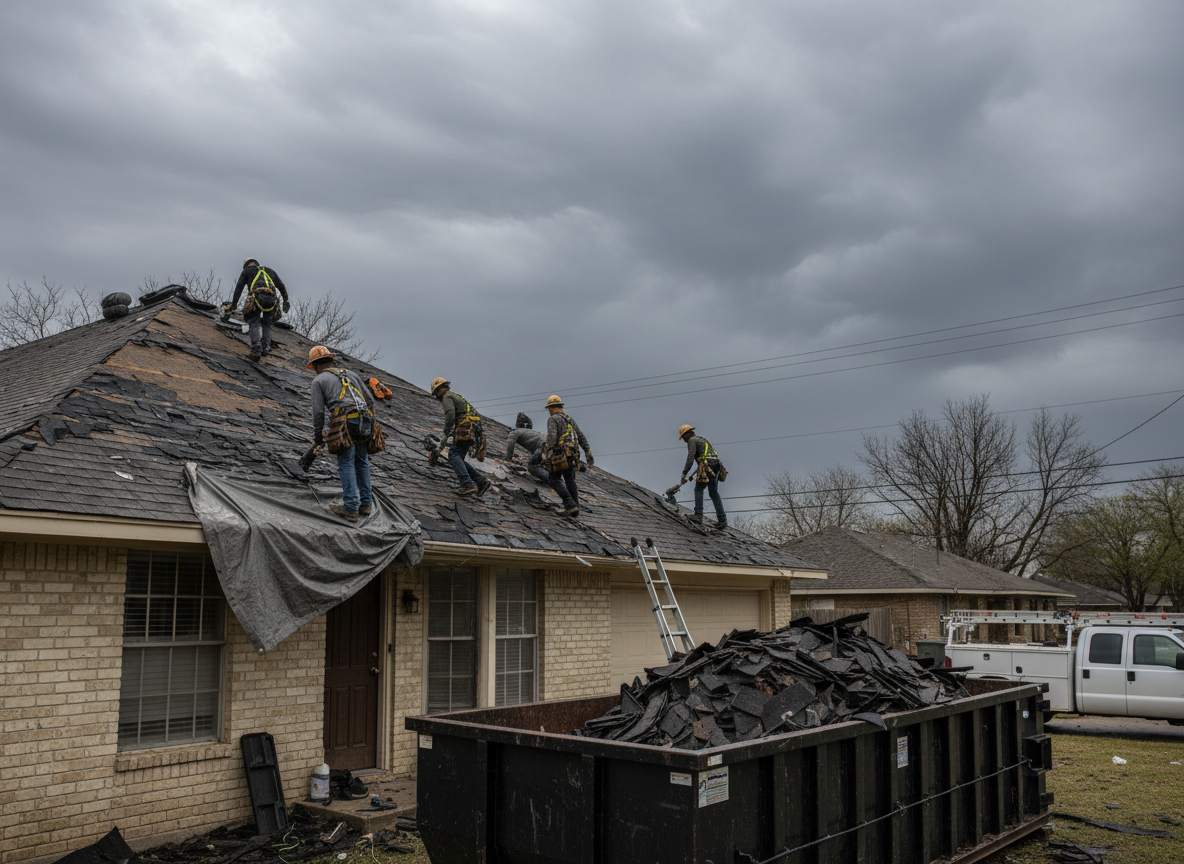
Connecticut is small enough that a single storm can cross it in a day, and it still manages to divide into three quite different roofing problems. Along the shoreline the exposure is Long Island Sound: nor'easters, driven rain, salt and a storm surge history that includes the 1938 hurricane and, more recently, the water pushed ashore by tropical systems. In the Connecticut River valley and the old industrial cities there is a dense stock of eighteenth- and nineteenth-century housing with slate, steep pitches, dormers and flat-roofed additions. In the north-west hills, Litchfield County gets snow and ice in a way the coast does not.
Where those three meet, the roof is usually older than the covering on it. A colonial house that has been re-roofed three times carries flashings from three different decades, and a shoreline cottage that has been raised or extended carries a junction for each change. This page covers what the weather does, which coverings the housing stock uses, the services available, the metros covered and how a repair runs. If water is coming in, call (833) 406-0167 and describe where it appears and what the weather was doing at the time.
What Connecticut weather does to a roof
Sound-effect storms and the shoreline
A nor'easter tracking up the coast puts the Sound's shoreline on the windward side, and the wind arrives with rain or with wet snow that sticks to everything. Wind uplift works at edges, ridges and hips; the driven rain works at wall junctions, dormer cheeks and the flashing around chimneys. Because the Sound is shallow and enclosed, surge behaves differently from the open Atlantic, but the water still arrives, and buildings close to the shore have been rebuilt or raised often enough that the roof-to-wall junction is rarely original.
Salt is the slow exposure. It settles on fasteners, vents and edge metal, and it shortens their life well before the covering shows any failure.
Ice in the hills
Litchfield County and the higher ground in the north-west get the winter the coast does not: sustained cold, snow that stays, and freezing rain that glazes the roof and loads the eaves. Ice dams form where heat escapes into an attic that was never designed for modern insulation, and the water enters at a valley or a chimney rather than at the eave itself. Freeze-thaw then works on the masonry, opening the joints at a chimney and the mortar under a coping.
The valley: humidity, thunderstorms and hail
The Connecticut River valley is humid in summer, and a roof that stays damp grows algae and moss on shaded slopes. Afternoon thunderstorms bring hail, and the state also sees microbursts and occasional tornadoes — short, local events that strip one street and leave the next intact. The damage from those is directional and is documented before anything is moved, because the pattern is the evidence.
Old houses, new loads
A Connecticut roof is frequently a roof over a house that has been altered. Insulation added in the 1980s, a finished attic, a dormer cut in during the 1960s, a skylight, a wood stove flue — each of those either changes the heat profile of the roof or adds a penetration. The result is a roof that leaks for reasons that had nothing to do with the last roofer.
Roof types and housing stock in Connecticut
Steep colonial and Victorian pitches
The state's oldest housing was built to shed snow with a steep pitch and, originally, wood shingle. Many of those roofs now carry asphalt shingle; some still carry slate, and a few retain wood. On a steep pitch the volume of water arriving at the eave is high, which is why the gutter, the drip edge and the ice barrier matter more here than the field of the roof.
Slate on the old cities and the established suburbs
Slate covers a large share of Hartford, New Haven and the established suburbs around them, plus churches, schools and the older campus and institutional buildings. Sound slate outlives its flashings several times over, so the repair is usually metalwork, or individual units replaced with salvaged material of matching size and thickness. Copper valleys, gutters and cornices belong to the same fabric and fail on their own schedule.
Flat roofs on the cities and the additions
Hartford and New Haven carry a substantial stock of flat-roofed buildings: three-deckers, commercial blocks with parapets and rear extensions on older houses. These are built-up or membrane assemblies that fail at seams, parapets, scuppers and drains. On a commercial block the parapet coping is usually the first thing to inspect, because a coping that has come loose lets water into the wall behind it.
Metal on barns and rural buildings
Through-fastened metal covers barns and outbuildings through the rural towns, including the long, low tobacco barns of the river valley, and standing seam appears on newer rural houses. The recurring failure is at the fastener washer, and where a roof sheds onto a doorway or a path the edge detail matters.
Asphalt shingle across the suburbs
Most of the post-war housing stock is shingled. It is asked here to survive freeze-thaw at the eave and a humid summer that keeps the deck damp; ice barrier, underlayment and ventilation decide how long it lasts.
Roofing services in Connecticut, from the Sound to the hills
Emergency roof repair
A limb through a roof or a wind-opened ridge is closed first and assessed second. The opening is photographed before it is covered, because a limb often damages the deck and the framing underneath as well as the covering above.
Emergency roof tarping
On a steep colonial pitch in freezing weather, a tarp is fixed from a ladder and a ridge rather than by walking the roof. Cold makes adhesive useless, so battens do the work.
Roof leak repair
Chimney leaks here are usually masonry and flashing together: the joint opens, the water goes behind the flashing and shows on a ceiling well away from the stack. Both halves of that repair have to happen or the leak simply moves.
Storm and hail damage repair
A microburst can strip one street and miss the next, so the survey starts with where the wind actually went. Hail is recorded on the same visit, and both are separated from the weathering that was already there.
Roof repair
Connecticut repairs are frequently inherited: a valley that was re-laid in one material and flashed in another, a dormer added without a new flashing, a skylight curb that was never quite sealed. The repair reconciles the two.
Roof replacement
On an eighteenth- or nineteenth-century house, replacement work is about the deck and the flashings more than the covering. Ice barrier, underlayment and ventilation are fixed while the roof is open, along with whatever the framing needs.
Roof installation
New roofs are specified for the exposure at the address: snow and ice in the north-west, wind near the Sound, and a flat assembly with more than one drainage path on the older commercial buildings.
Shingle roofing
The post-war suburbs and most of the newer stock are shingled, and the details that decide their life are the eave, the ridge vent and the ice barrier between them.
Tile roofing
Clay tile turns up on a handful of buildings, usually old and usually worth keeping. The tile is lifted, the underlayment renewed, and the covering relaid over it.
Metal roofing
Metal covers the tobacco barns of the river valley and the outbuildings of the hill towns, and the failure is nearly always the washer rather than the panel. Edge detail and discharge decide how the roof behaves in a thaw.
Flat roof repair
On a Hartford three-decker or a downtown block, the parapet coping and the scupper cause more interior damage than the membrane itself. Both are inspected before a membrane repair is quoted.
Roof coating
A coating is worth considering on a dry flat roof that gets foot traffic and summer heat. It is not worth considering on one that ponds, because the water will still be there under the coating.
Roof inspection
On an old Connecticut house the useful inspection says what is original: which slate, which flashing, which valley. That is what tells an owner whether they are maintaining a roof or gradually replacing one.
What's included in a Connecticut roof repair
- Heat loss and ventilation assessed whenever ice is the complaint, since the ice is the symptom rather than the cause.
- Parapets, copings and scuppers photographed on flat roofs, with the drainage route recorded.
- Ice barrier and drip edge renewed wherever the covering is opened at an eave.
- Chimney flashing and the masonry joint above it assessed together, because the two fail as a pair.
- Slate and wood repairs matched by size and thickness, with the state of the nails reported rather than assumed.
- A closing walkthrough with the photographs and a written note of what was found but not repaired.
Connecticut metros and cities covered
Coverage in Connecticut includes Hartford and the surrounding towns, New Haven and the shoreline east and west of it, Bridgeport, Stamford, Norwalk and the Gold Coast, Waterbury, Danbury, New Britain, Meriden, Bristol, Middletown, Norwich and the south-east, Storrs and the north-east, and the Litchfield County towns in the north-west hills.
These are coverage areas, not offices. The company is headquartered in Oklahoma City, Oklahoma, and works across Connecticut from that base. The exposure changes over a short distance here: a Stamford roof is judged on driven rain and salt, a Hartford three-decker on parapets and drains, a Litchfield roof on snow and ice.
From the first call to a finished repair
A call begins with what you can see and when you see it. Water on a ceiling in a thaw, a damp patch at the top of a wall after a nor'easter, shingles in the garden after wind, a piece of slate on the path. The address, the building type and the covering are recorded, and the call is triaged so that an active leak is treated differently from a question about a roof that is simply old.
The visit looks at the interior first, because on an old Connecticut house the ceiling identifies the wall to investigate. The roof is walked where it is safe, the attic is inspected, and the flashing, valleys and drainage are photographed. Where the complaint is ice, the insulation and ventilation are assessed on the same visit rather than left for a second appointment.
The scope separates covering, underlayment, deck, flashing and metalwork, so that the invoice matches what was agreed. Where there is a genuine choice — a section repair against a slope replacement, a coating against a re-cover — both are described with what each one assumes about what is underneath.
Work is planned around the weather and around the building. Material is staged, protection goes over anything below, and the deck is inspected as it is exposed so that soft sheathing is reported before it is covered. In winter the rule is not to open a roof that cannot be closed before the next system.
The repair is reviewed with you at the end, the photographs are handed over, and anything noticed but not repaired is written down. On a shoreline building that note often includes the fixings, which are the part that fails next.
Other Northeast state guides
The Northeast region's winter and coastal exposure is set out on the Northeast region page, and every state we cover is listed on the state index.
- Roof repair in New York
- Roof repair in Pennsylvania
- Roof repair in New Jersey
- Roof repair in Massachusetts
- Roof repair in Virginia
- Roof repair in West Virginia
- Roof repair in Maryland
Call about a Connecticut roof
Connecticut roof problems tend to be inherited ones: a flashing that was altered when the house was extended, an attic insulated without being ventilated, a slate roof whose nails are older than its slates. They are all readable from the inside out. Call (833) 406-0167 and describe what you are seeing, and the conversation can start with which of the state's three climates the building is really in.
Around Connecticut
We regularly work near:
- 📍Mark Twain House
- 📍Mystic Seaport Museum
- 📍Gillette Castle State Park
- 📍Connecticut River
- 📍Yale University
Roof Repair in Connecticut — Local Notes
- •On the shoreline, fasteners and edge metal fail before the covering, because salt reaches every metal detail.
- •Hartford three-deckers and commercial blocks are flat-roofed, so parapets, copings and scuppers are the first inspection points.
- •On eighteenth- and nineteenth-century houses the flashings are often older than the covering on top of them.