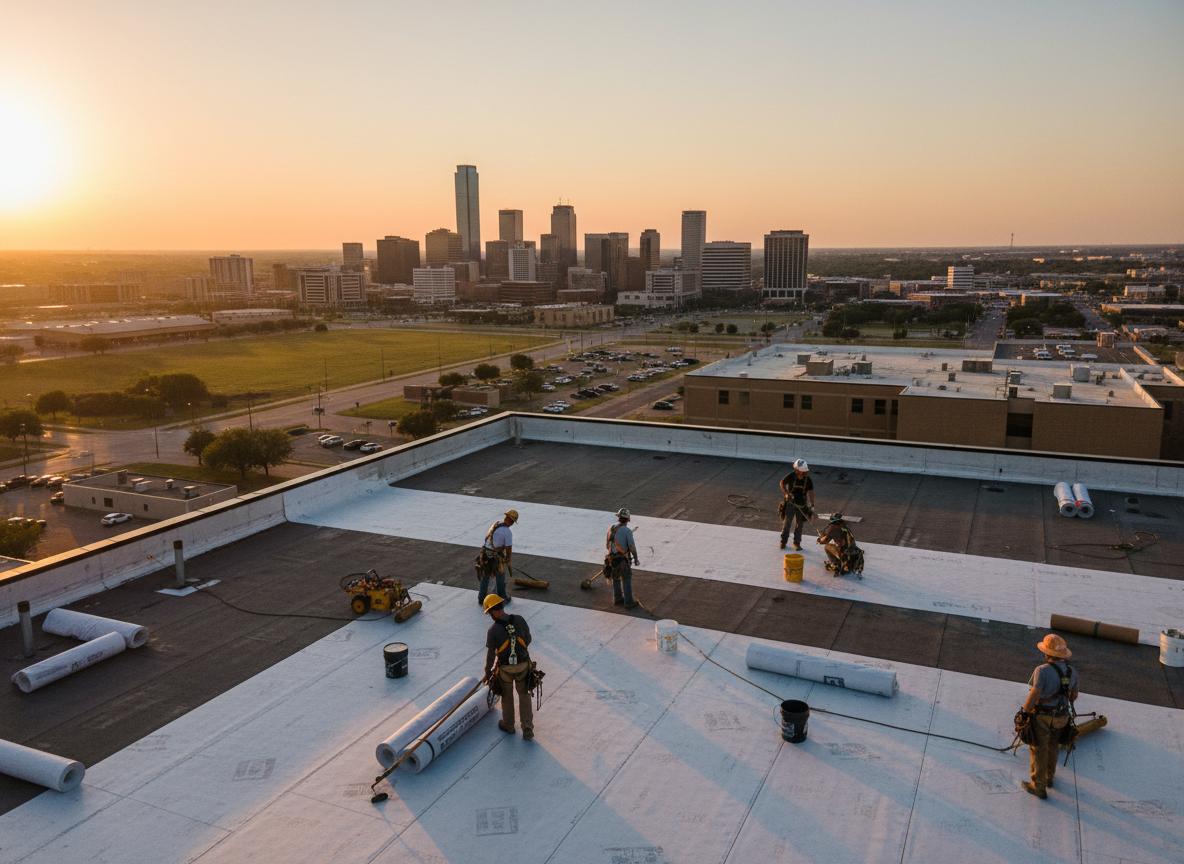
Roofing in the United States is not one problem with forty variations. It is a set of distinct exposures — hail on the plains, wind-driven rain on the Gulf and Atlantic coasts, lake-effect and nor'easter snow in the north, monsoon and desert sun in the southwest, wildfire embers on the urban fringe — and a roof is repaired well or badly depending on whether the person looking at it recognises which exposure it has been through. This page is the map: every state we cover, grouped by region, with a link to the states where the detailed guide is already published.
Roofing Professionals USA is headquartered in Oklahoma City, Oklahoma, and works across forty states from that base. The states and cities listed here are coverage areas, not offices.
How to use this page
Each state guide explains the same four things in the terms that state actually needs: what the weather does to a roof there, which coverings the local housing stock uses, what the thirteen roofing services look like in that climate, and which metros are covered. They are written separately rather than swapped by name, because the repair that follows a hailstorm in Lubbock has almost nothing in common with the repair that follows an ice storm in the Ozarks.
If your state is not linked yet, the region page it sits under still describes the climate and the work. Start with the region, and call (833) 406-0167 to talk through the roof itself.
South Central
The hail belt. Texas, Oklahoma, Kansas, Colorado, Missouri and Arkansas share the corridor that produces the highest frequency of large hail in the country, and each state adds its own second exposure: Gulf hurricanes in Texas, ice in Oklahoma and Missouri, prairie wind in Kansas, mountain snow in Colorado, and heavy rain in Arkansas.
- Texas — Gulf wind-driven rain, Panhandle hail and West Texas sun.
- Oklahoma — hail, tornado wind and ice storms on brick-and-shingle housing.
- Kansas — prairie wind, spring hail and ice at the eaves.
- Colorado — Front Range hail, mountain snow load and high-altitude sun.
- Missouri — ice storms, humid summers and old brick housing.
- Arkansas — heavy spring rain, Ozark ice and humid summers.
The South Central region page covers the shared weather in more detail.
Roof repair by state
- Florida — hurricane wind, tile underlayment and humidity.
- Georgia — inland storm wind, north Georgia hail and mountain ice.
- Alabama — Gulf wind and salt, central hail, Tennessee Valley tornado wind.
- South Carolina — barrier-island wind and salt, midlands rain volume, upstate ice.
- North Carolina — Outer Banks wind, Piedmont hail, mountain ice and snow.
- Tennessee — humid west, storm-prone middle, ice in the east.
- Mississippi — Gulf wind, heavy rain and drainage, clay movement.
- Louisiana — rain volume, settlement at the roofline and hurricane wind.
The Southeast region page describes the hurricane and humidity exposure across the region.
Midwest
What a roof carries rather than what hits it. Snow sits for weeks, melts and refreezes at the eaves, and the freeze-thaw cycle works on every flashing detail through the winter. Summer brings hail and straight-line wind, and the housing stock spans a century of construction methods.
Roof repair by state
- Illinois — lake-effect snow in the north-east, downstate hail and ice, and Chicago's parapet walls and low-slope rear sections.
- Ohio — snow-belt winters in the north-east, Ohio River ice in the south, and a dense stock of older hipped and slate roofs.
- Indiana — open-ground wind, spring hail and tornadoes, farmstead metal and industrial flat roofs.
- Michigan — lake-effect belts that vary by the mile, freeze-thaw at the eave and older brick housing.
- Wisconsin — a long winter, deep frost, ice dams and Milwaukee's cream-city brick.
- Minnesota — some of the deepest snow loads in the country, long ice seasons and steep pitches built to shed.
- Iowa — derechos and sustained straight-line wind, hail, and drifting snow on the open plain.
- Kentucky — ice storms, humid summers and brick housing that leaks at the wall before the roof.
The Midwest region page sets out the snow-load and freeze-thaw conditions.
Northeast
Where the age of the housing stock matters as much as the weather. Eight states hold some of the oldest roofs in the country — slate, clay tile, standing seam and layered shingle on houses built before modern underlayment existed — and the region's nor'easters test every one of those details with wind-driven rain and heavy snow.
New York, Pennsylvania, New Jersey, Massachusetts, Connecticut, Virginia, West Virginia and Maryland.
The Northeast region page covers the old-housing and winter-storm exposure.
Mountain West
A region of extremes held together by sunlight. From the Sonoran Desert to the high plains of Montana, roofs deal with intense ultraviolet exposure, monsoon rain, snow load and wildfire embers, often within the same state. Altitude changes what the sun does; dryness changes how materials age.
Arizona, Nevada, Utah, New Mexico, Montana, Idaho and Wyoming.
The Mountain West region page describes the sun, monsoon and fire exposure.
West Coast
Two contradictory demands. A roof has to shed months of steady rain without failing at a detail, and then resist a dry season of sun and, increasingly, wildfire embers. The housing stock runs from mid-century tract homes to steep-roofed craftsman houses and low-slope commercial buildings.
California, Oregon and Washington.
The West Coast region page covers the rain-season and fire-season conditions.
Every state in one place
Forty states, six regions, one number. If the roof is leaking, storm-damaged or simply past the point where another repair makes sense, call (833) 406-0167 and describe what it is doing. The state and the city are the first things we ask, because they decide what the roof has been through.
Roof Repair in States — Local Notes
- •Each state guide is written for that state's climate rather than name-swapped from a template.
- •The states and cities listed across this site are coverage areas, not offices.
- •Regions are the fastest way to find the climate your roof sits in if your state guide is not published yet.